Ice hockey fans may remember Finnish Lions goalkeeper Karri Rämö from Canada's World Cup bronze medal team 15 years ago. But does anyone remember around whose neck the World Cup gold was hung in Canada the following year in 2009? It was won by Ville Rämö from Kuopio shared with his South Korean competitor - albeit in a different sport, masonry.
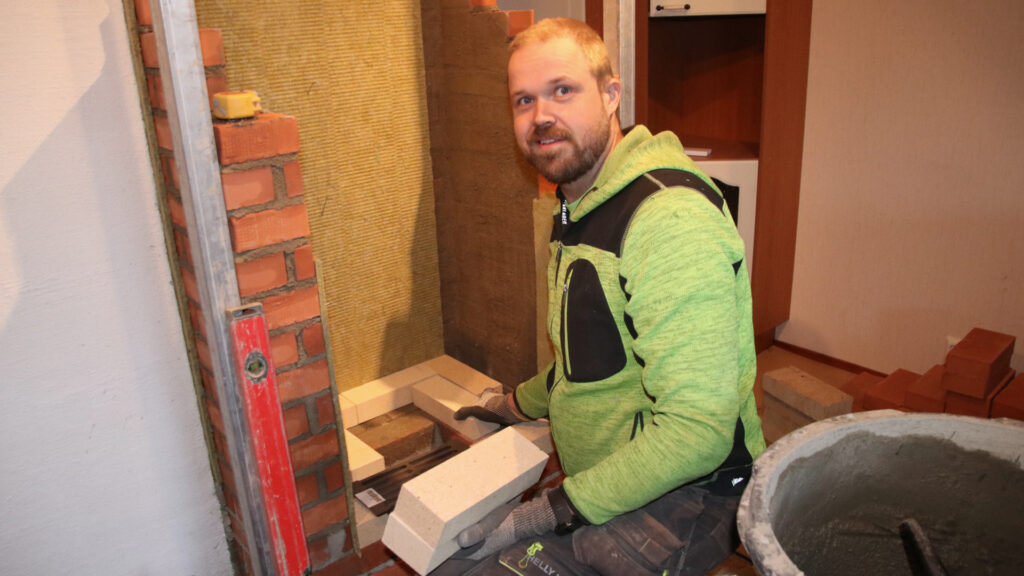
The world master of masonry, Ville Rämö's career has continued, especially as a skilled maker of fireplaces. Photo: Ilpo Lommi
Ice hockey World Cup medals, let alone championships, are not achieved without camps, practice matches and high-quality training. The same applies to skills competitions. Ville Rämö at the age of 22, he prepared for the World Cup competition in the training courses and camps of the Skills Finland organization that runs the Taitaja competitions, alongside his bread work as a bricklayer and tiler.
"The world championship required precise, error-free and fast work. It was not worth making unnecessary movements and you had to keep your nerves under control. Work tools and working conditions differed from Finnish, down to the bricks and mortar. The tasks were difficult and different from normal work patterns. Fortunately, we had received hints about the differences compared to domestic masonry. We also took work tools to Canada, including loads of mortar."
"I developed my own way of working and rhythm for the race and I stuck to them. The mental training helped a lot with concentration and calmness during the race. The benefit also transferred to working life," says Ville Rämö.
After the world championship, he gained fame and recognition in the industry circles, so that there was even more work. Over the years, Ville Rämö began to specialize in masonry of various fireplaces. He was also found to be interviewed for such a job at Suonenjoki's Lempy on an October afternoon, when the master was bricking a brick fireplace and baking oven to replace a soapstone oven in a detached house.
I became a bricklayer instead of a carpenter thanks to a teacher
Ville Rämö's career path to becoming a bricklayer was not exactly straightforward when he went to study building construction at the Savo vocational college.
"In the beginning, my goal was a career as a carpenter, but there was a teacher at the vocational college who also knew how to teach us masonry. I hadn't learned the skill at home, even though there are builders in the family. Not many people are interested in bricklaying at the college, but I was excited when I saw the result of the collaboration of hand and thought. The teacher noticed my enthusiasm and ability to learn. So he recommended focusing on masonry and tiling instead of woodwork.”
"My enthusiasm even carried so far that during my studies I participated twice in the Taitaja competition for young people studying a Finnish profession in house building. I placed second and third. Thanks to the awards, I was able to become a World Cup coach and representative. After my studies, I went to work at YIT, initially bricking facades of apartment buildings and tiling interiors. In a few years, I learned good working life skills and routines."
"My biggest job when I was young was laying almost 100 bricks with a colleague at the apartment building site in Itkonniemi, Kuopio. I guess the bricks haunted my sleep then, but I never got tired of bricklaying. The work of a mason is quite varied and partly creative, because the jobs are rarely exactly the same. For example, the oven brickwork for my type of bread is like making a piece of furniture. The oven is also a decoration element in addition to its actual purpose," says Rämö, who has built close to a million bricks in his career.
An interesting position on the labor market
Since 2010, he has worked as an independent bricklayer, meaning he is not employed by any company. However, he did not establish his own company and is not a so-called a small business owner or a man from a temporary work company. In sports, Rämö could be called a so-called as a free agent who handles the contractual matters himself.
"I do contracts as an employee with a tax certificate, that is, I am paid by the client at the time. The system has its pluses and minuses, but I have not planned to change it, at least not in the near future. Rakennusliito's good Salkamylly program has reduced a lot of paperwork and clarified salary and expense reimbursement management, taxation and social security."
"I don't have an accountant because I'm not an entrepreneur. Too much I don't get VAT relief, but I also don't invoice VAT from my clients as if I were a self-employed person. My work will be more affordable for subscribers when the VAT is removed, but on the other hand, the household deduction will be smaller for them and they will not get a VAT refund. I am entitled to unemployment allowance, but there has been enough work regardless of the construction industry's economic cycles, and I have not been unemployed."
Bricklayers have a favorable future and a need
"There is a shortage of skilled masons, as not enough of them graduate from vocational schools and the apprenticeship route doesn't seem to attract enough. Machines and automation will probably never replace us and our work cannot be replaced by other methods. A little concern is directed in the direction of the European Union, if it tries to ban household burning of wood, which is important for the domestic energy supply. The decline in construction is not scary, because there is always work for masons."
"I work on contract and hourly wages. I usually have 25-30 clients a year. I've worked more when I was younger, but as a family, I've come to value holidays, weekends off and evenings at home," Rämö reminds.
He lives with his family, his wife and two children, in Ritisenlahti, South Kuopio.
"At the beginning of this year, we moved to a detached house built in the 1990s in Ritisenlahti. There is fireplace and furnace heating, but next year I plan to renovate them to my liking. Maybe the brick-built fireplace and baking oven will become a reference point for my skills," says Rämö.
Someone may be reminded of the beginning of the story, whether the top bricklayer Rämö and the top ice hockey goalie Rämö are related to each other.
"At least not close, but perhaps a connection could be found further down the family tree. We're a bit of the same size," says Ville Rämö.
Due to his length and reach, he would cover the puck or ball paint well. The movement of the hands is also Rivakka and the eyes are precise. His mental strength, thoroughness and organization are also qualities that even top athletes need. A good follow-up question is whether Ville Rämö has an active sports and exercise background.
"As a child and young person, I didn't get the opportunity to play sports. My parents thought sports were a waste of time. Halo felling was the best form of exercise and I stayed in shape with hard work. That kind of mentality stayed with me until I was an adult."
Exercise in free time is important for well-being and ability to work
"In recent years, however, I have realized that even though the work of a bricklayer is physically demanding and exhausts the body compared to many other professions, it is precisely for this reason that you have to do a variety of other exercises such as gymnastics, cycling, the gym and hiking in nature. Hunting and fishing with dogs are the best counterbalance to work, both physically and mentally."
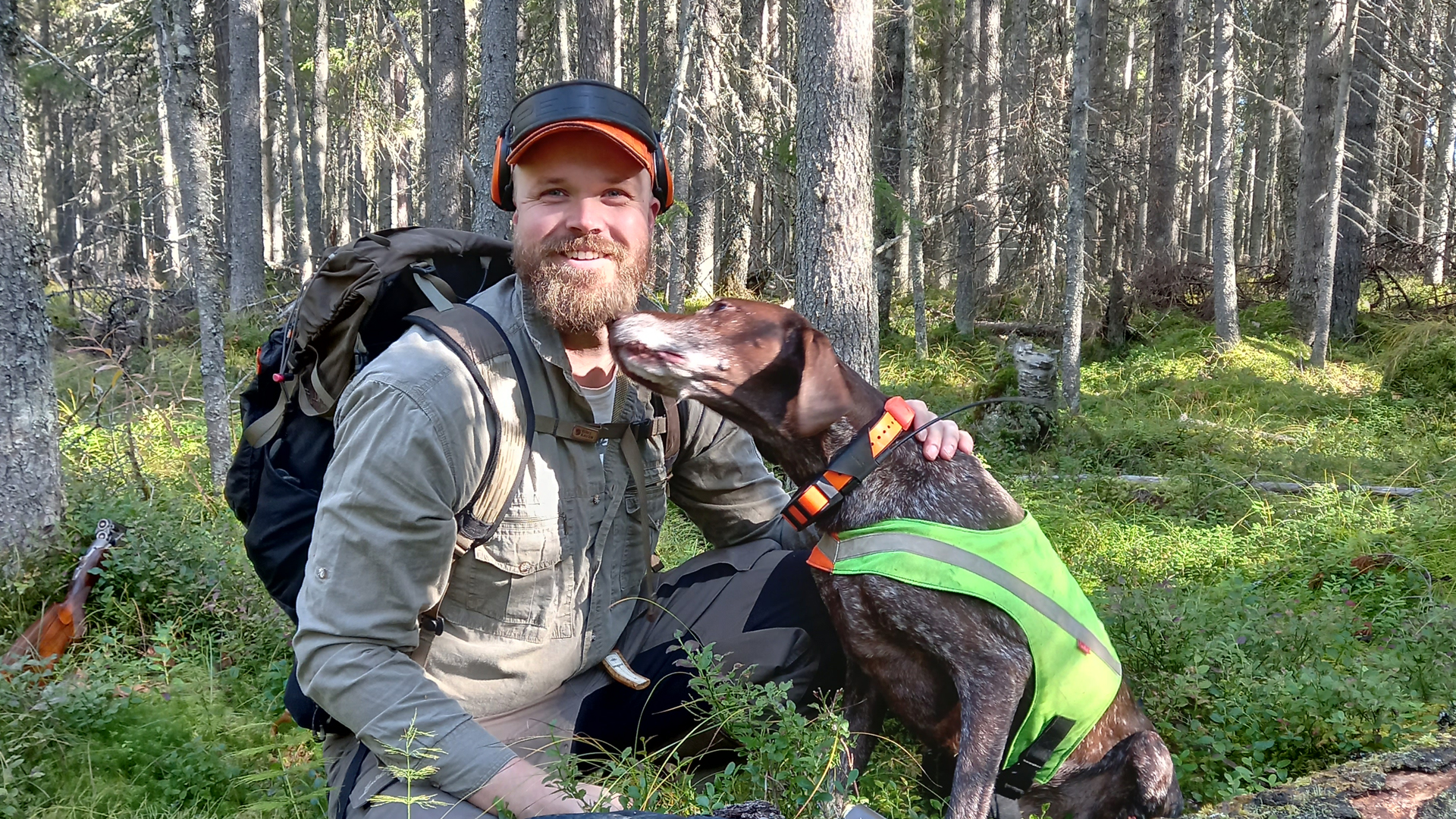
Hunting with his own dog and other activities in nature are Ville Rämö's hobbies and good physical and mental health maintainers. Photo: Ville Rämö
"I haven't had any significant accidents, but I've already had sprains, especially on my back, even though I'm only 36 years old. Work ergonomics and good muscle condition are important if you want to remain able to work. Supportive muscles in particular must be trained and other muscles and the brain must be stimulated. Rest and recovery must not be forgotten either," stresses Ville Rämö.
"Starting as a coach for young bricklayers might be interesting in the future in addition to work. I believe that I would be able to guide them to higher quality and more efficient work and better work ergonomics. I am also development-minded, so I could participate in the development of mason's vocational training and new ways of working. I have devised and implemented them in my career. In this job, you can compete with yourself in the quality of the work, maybe sometimes even in the speed, as long as you don't get bogged down", reminds the world champion of bricklaying 14 years ago.
Text and photo: Ilpo Lommi