When we talk about the grey economy in the construction industry, we often only see statistics, phenomena and headlines. In practice, however, the grey economy is more concrete than statistics, for example, underpaid workers, lost contracts and young people who never apply for the industry. In reality, the decline is a bigger issue than statistics and we all pay the cost. It costs workers, companies and society as a whole, as well as the reputation of the industry.
The bill circulates from the perpetrator to society
I see that the first to suffer from the gray economy is the individual worker. According to a recent inspection report by the Occupational Safety and Health Administration Underpayment was detected in 57% of construction inspections in 2025 – clearly more than the average for risk industries. At the same time, employment relationships are increasingly disguised as light entrepreneurship or agency relationships, sometimes so that the employee himself does not fully understand that he is outside the protection of labor legislation. The result is always the same: the wage level falls, even if collective agreements are in force.
The grey economy also punishes honest companies. When prices are driven down through dishonest means, honest operators cannot compete at the same prices without losing their margins. And without margins, it is impossible to hire experts, develop the business, or pay the wages that good work deserves.
The problem is accentuated because construction is a strongly project-based business. There is often no continuous production to guarantee a steady cash flow – each project must be resourced separately: tools, employees, expertise. If there is no margin, the break between the next project can be fatal for the company.
This is also reflected in the statistics. According to a report published by the Tax Administration and the Construction Industry Federation in October 2025 The construction industry recorded almost a thousand bankruptcies in 2022–2023 – 946, 23 percent of all bankruptcies, even though the industry's share of the comparison data was only 14 percent. The beginning of 2025 was record: bankruptcy applications were filed 57 percent more in January-March than a year earlier – the most in the entire decade – and the construction sector was one of the worst-hit industries. According to RT Up to 90 percent of the grey economy cases in the construction sector are found in companies with a turnover of up to one million euros. So it's not a matter of a few large abusers, but the problem runs along the entire subcontracting chain.
When wages are not paid or money flows out of the economy through the grey economy, it is directly reflected in people's purchasing power and well-being, not just on individual construction sites. The construction industry is not a small industry: According to RT It accounts for about 15 percent of Finland's gross domestic product and directly employs about 250,000 people and indirectly well over half a million. Roughly one in five working Finns earns their living from construction or related services. When money leaks out of this machinery through the grey economy, the effects are visible throughout the national economy.
The biggest price is fame – and it drives away young people
Still, I believe that the biggest blow will not be to the financial statements, but to the reputation of the industry. For the past 3–4 years, the public has been talking mainly about bankruptcies and the harm caused by the grey economy to employees, as well as the poor employment situation in the industry. This creates a negative image of the entire industry and its employment opportunities, which I think is wrong. If construction is seen as an industry that feeds the grey economy and crime, where occupational safety risks are high and the work is physically demanding in poor conditions, then the entire industry will lose out in the competition for skilled workers.
However, from our perspective, the reality in Barona's construction industry is different: we could employ more and more people responsibly with wages and working conditions in accordance with the TES, if only we could find the workers. The artificial intelligence boom is making many young people wonder whether their skills will last in the future – and manual skills are starting to look like an increasingly safer choice than many forms of knowledge work. As an electrician, HVAC installer or skilled construction worker, you can develop in an environment where there is a sense of doing and continuity regardless of how technology develops.
One concrete way to increase the attractiveness of the industry in the eyes of young people and those changing careers would be to offer more internship and summer job opportunities through responsible actors. When people actually get to experience practical work on a construction site – not just hear about it – they see what kind of professionalism and work ethic the industry has at its best. This lowers the threshold for choosing construction as a career much more effectively than any single communication campaign.
Partnership overcomes rules that can be circumvented
When considering what could also help change the direction of the industry, I don't see the solution in regulation and supervision alone. Customer responsibility issues are already quite well-established, but there are always workarounds. This is usually because projects are not planned early enough and resourcing is done at the last minute, which usually leads to good practices also suffering. It would be important for all actors in the industry to commit to responsible practices and operating methods from the very beginning.
A good example of a responsible approach is the one developed by Hoas Informed construction site model, where the student housing foundation has introduced common rules for all its construction sites: regular employee surveys, a low-threshold reporting channel for irregularities, and openly visible results for the entire chain. When the client takes such an active role and makes working conditions visible from the very beginning of the project, it is also more difficult for the main contractor and subcontractors to turn a blind eye to the grey economy. The model has expanded from one construction site to ten in a year – an indication that this approach can be replicated.
The direction is up to all of us.
The grey economy will not disappear with one decision, but the direction can be turned when every part of the chain – client, main contractor, subcontractor and employee – wants to build the same thing. When we do it right, the construction industry will become what it is at its best today: an extremely rewarding industry that young people are boldly applying to. It is not only a fairer way to work, but also our most effective way to solve the skills shortage and ensure that there will be enough workers in the construction industry in the future.
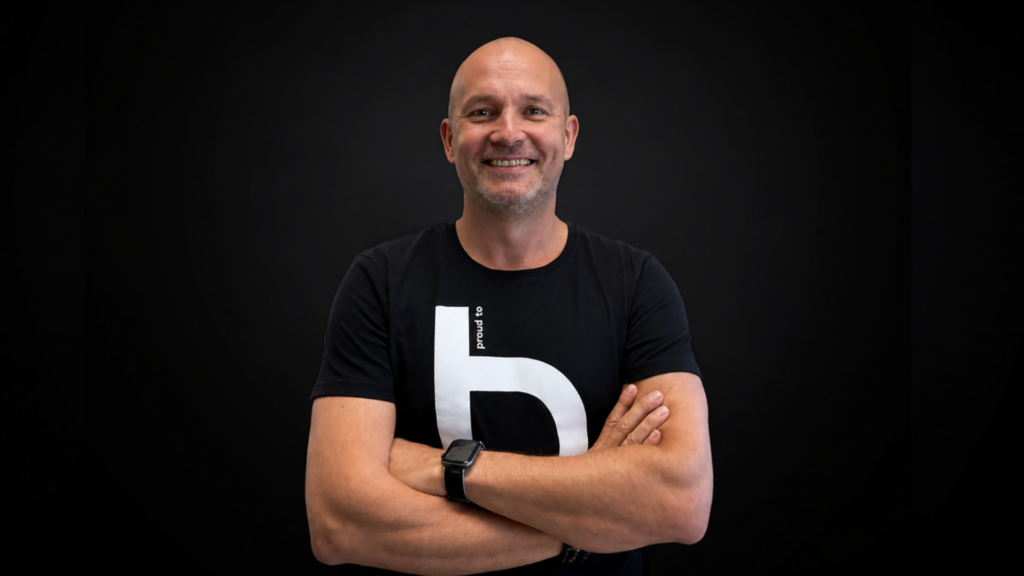
The author Rami Collin works as a divisional manager at Barona Rakennus, where he is responsible for personnel and construction services. Barona Rakennus Oy is a subsidiary of the Finnish Building Construction Industry Association. The article was originally published on Barona's blog.
Write a comment