The construction industry association RT expects the incoming government to enable growth. Politicians across party lines who participated in RT's election panels also called for decisions that promote growth and construction.
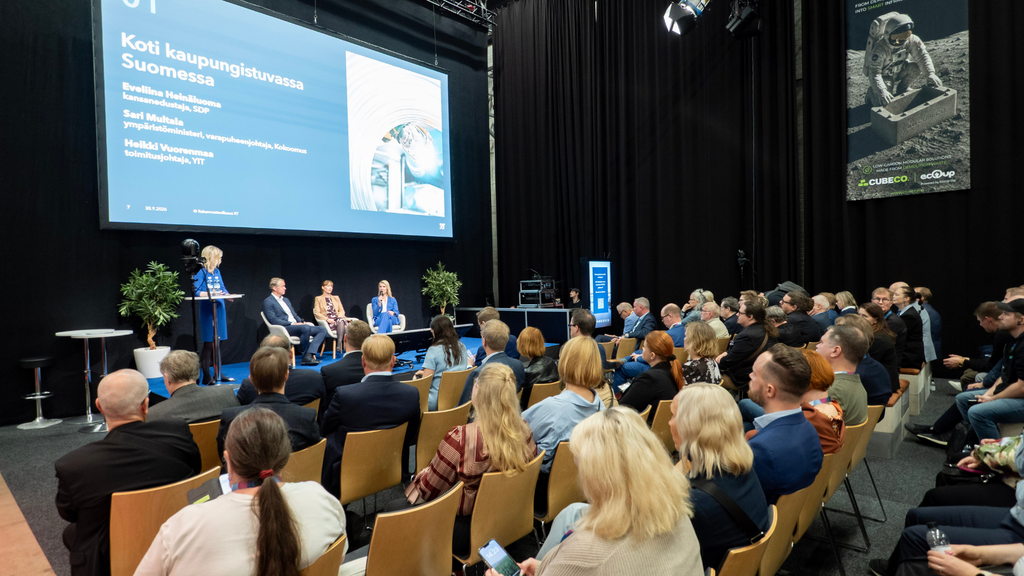
Construction and data center projects, among other things, were discussed in election panels organized by RT at the Finnbuild fair in September. The speeches repeatedly highlighted the need for more housing, better infrastructure, smoother permitting, and a more active approach to attracting investments and EU funding.
RT CEO Aleksi Randell reminded in his opening speech that buildings and infrastructure are always made for some important purpose. The construction industry enables housing, business operations and services through its work and plays a major role in the development of society.
“A country that builds well, does well,” Randell summarized.
Housing production needs momentum
The freezing of the housing market has led to a collapse in the production of new housing. For the fourth year in a row, construction of clearly fewer than 20,000 apartments has begun, even though the long-term need is over 30,000 apartments per year. The panel discussion raised concerns that the low housing production could be reflected in a shortage of supply and rising prices in the coming years, especially in growth centers.
Minister of the Environment and Climate Sari Multala (Kok.) reminded that the government has sought to accelerate construction by easing standards and facilitating zoning and permitting. The government has also made it easier to obtain loans and for first-time home buyers to enter the housing market. A support package of 110 million euros has been allocated for renovation construction. The work must continue, Multala said.
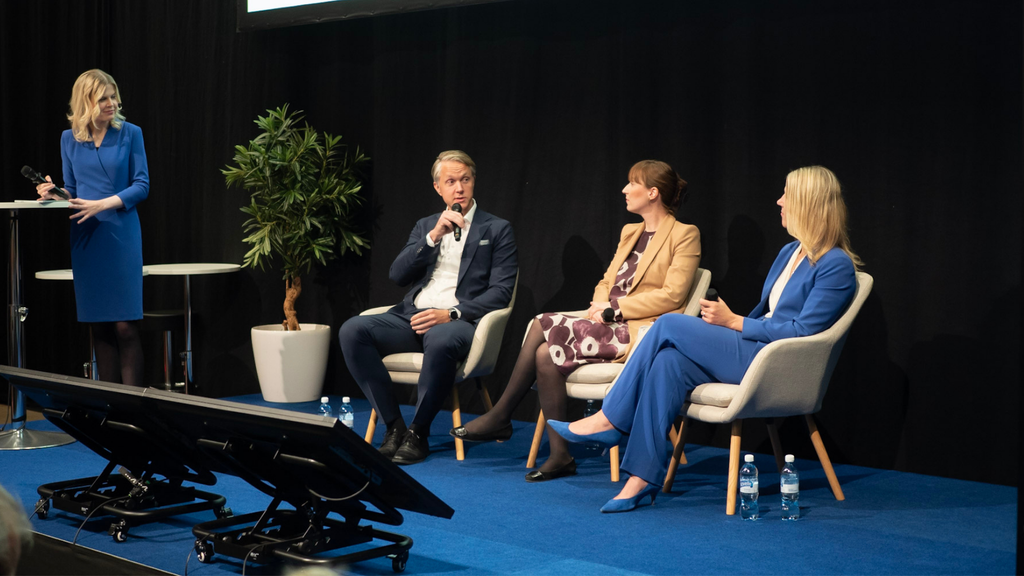
Social Democratic Party MP Eveliina Heinäluoma believes that the prolonged construction slump also requires targeted public support. He particularly highlighted the position of first-time home buyers and the SDP's proposals to remove the asset transfer tax from first-time home buyers and to restore the interest deduction to a limited extent for the same group.
“The actions must be very specific and justified,” Heinäluoma specified.
He reminded that approximately 40 percent of public sector investments in construction are returned in the form of taxes and fees.
“This is a very tax-intensive sector.”
The transfer tax was also mentioned by the CEO of YIT Corporation. Heikki Vuorenmaa. According to him, it is one of the factors that prevents people from moving for work. People's movement should be made easier now that the new economic layer created by new international investments is being built far away from the largest growth centers.
Roads are the foundation of a functioning everyday life and competitiveness
Members of Parliament Markus Salmon (middle) and Miko Bergbom (ps.) and Peab's Chief Operating Officer Ossi Simonen They focused on infrastructure, especially the problems caused by the huge repair debt. The trio's common message was that the deterioration of the existing road network must be stopped.
According to RT's estimates, the overall infrastructure investment need in Finland is approximately 200 billion euros over the next couple of decades. Bergbom emphasized the importance of functional infrastructure for competitiveness and safety, for example in terms of transport.
"If the roads are not in good condition, it will have an impact not only on the competitiveness of Finnish industry but also on the everyday lives and traffic safety of ordinary people."
Simonen emphasized the need for a comprehensive reform of the financing of basic road maintenance and better utilization of EU projects. According to him, without significant changes to financing, Finland will not be able to maintain even the current poor quality of the road network.
"We should remember that roads are not just an expense. In Finland, people and goods move on rubber wheels."
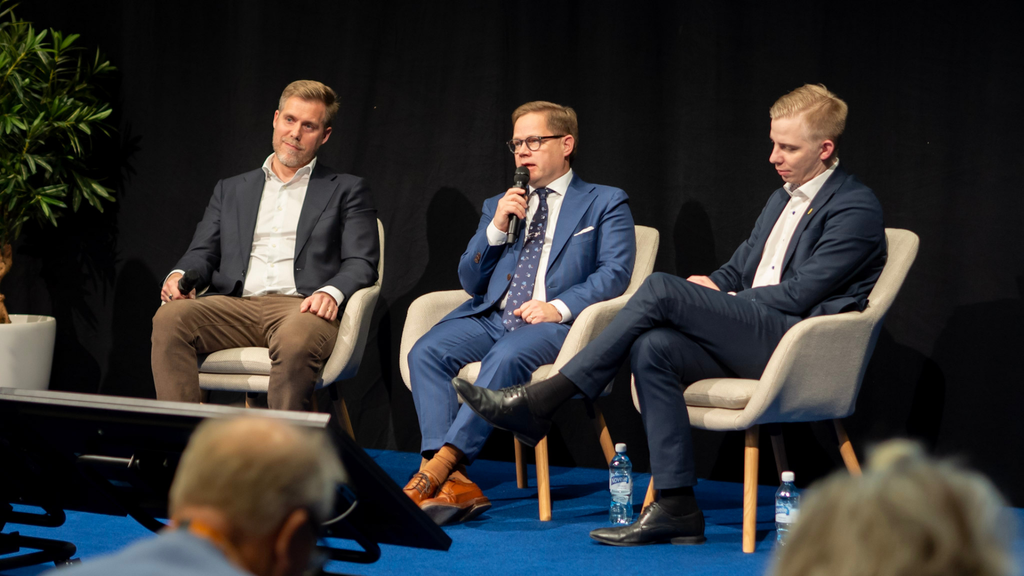
Lohi mentioned that the public finances are forcing choices to be made. According to him, all possible EU funding must be utilized so that national money can be freed up for the maintenance of the rest of the road network.
Utilizing EU funding became one of the key messages of the infrastructure panel. Connections within the TEN-T network, projects supporting military mobility, and cross-border connections were seen as an opportunity to attract investments to Finland without all costs remaining to be financed nationally.
Finland must enable a historic wave of investment
The green transition and data center projects offer Finland an exceptional growth opportunity. Investment decisions for the green transition have already been made for 46 billion euros, and the investment potential for data centers is estimated to be 55 billion euros by 2035.
Members of Parliament Pia Lohikoski (left) and Jenni Pitko (Green) and CEO of Rudus Mikko Vasama examined what the historic investment wave requires from Finland and what role the construction industry plays in it.
Vasama described the significance of this moment.
"We have a historically high number of green transition projects in the investment pipeline about to get underway. They will drive Finland towards growth," Vasama said.
He reminded that there is also demand for investments elsewhere. Finland is competing for them globally.
"We need to create an operating environment here that will attract large investments to Finland."
According to Vasama, Finland should learn from past mistakes. Permits and processes should be smooth.
The construction industry offers solutions to stop nature loss
Pitko emphasized that in the future, more attention must be paid to material flows and environmental impacts in construction. One way is to promote renovation construction, which uses fewer virgin materials than new construction.
"For example, data center projects should be nature-positive in that the impacts on nature are compensated. The construction industry can offer solutions for this."
Vasama understood this and stated that, for example, a per mille share of the giant investment could achieve a lot in combating environmental impacts.
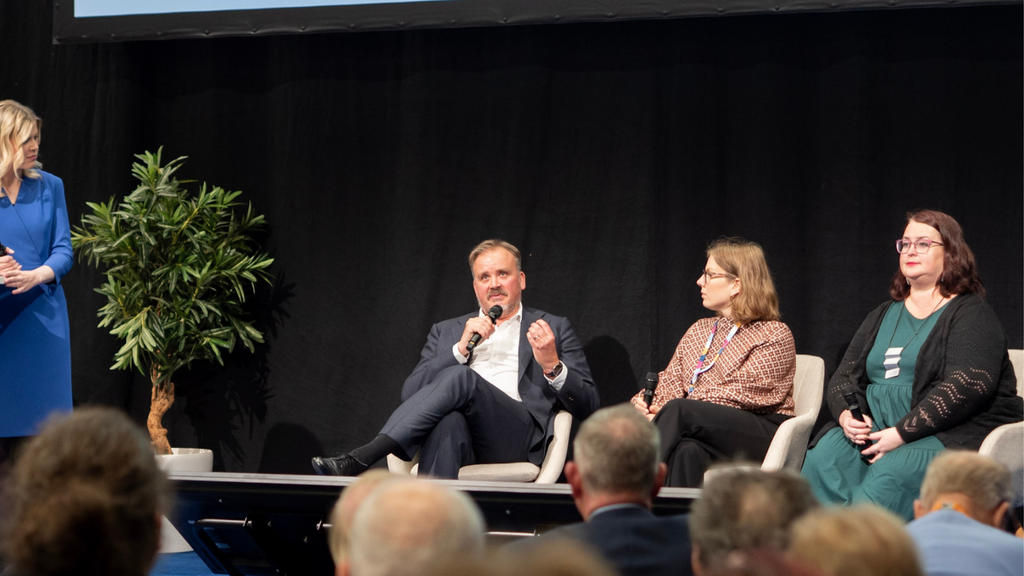
Low-carbon, circular economy and other environmental work in the construction sector also came up in the discussion. Lohikoski gave good feedback.
"It's great to see the roadmaps made by the Construction Industry and construction companies that want to be pioneers. They have something to offer beyond Finland's borders, whether it's about recycled concrete, for example."
Three times the growth
Although the green transition was at the heart of the discussion, attention eventually turned to Finland's growth and the next government term. According to Vasama, the three most important things for Finland in the next government term are growth, growth, and growth.
The decisive thing now is whether we can attract investments to Finland. They will drive construction and the growth of this country, Vasama said.
Photos: Antti Knuutila