Increasing biodiversity in the built environment brings tangible benefits, such as better stormwater management and more pleasant residential areas. To ensure these benefits are widely implemented, nature positivity must be incorporated into tenders and procurement criteria – and its effects must be measurable.
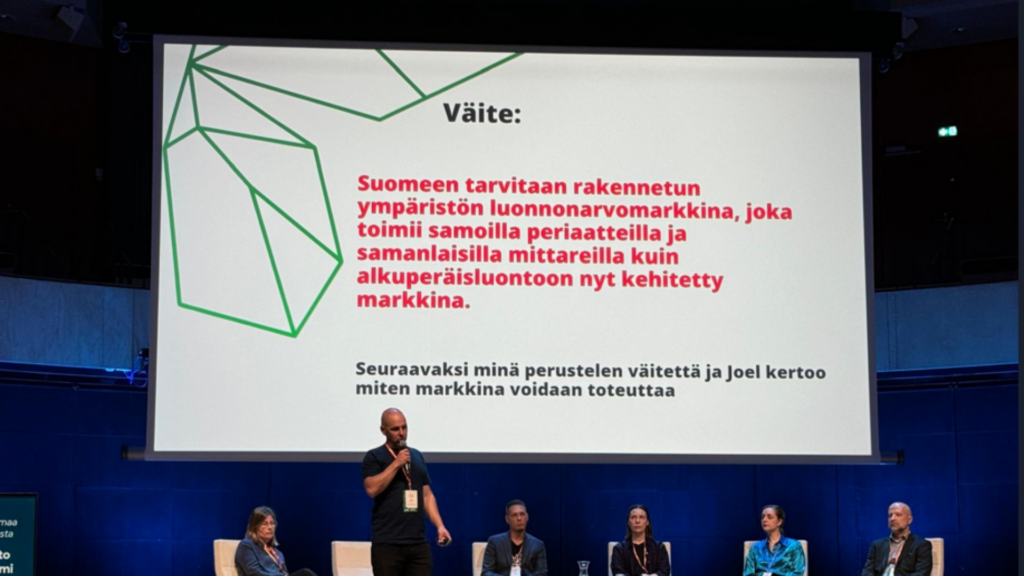
The ten largest cities and the Finnish Construction Industry Federation (RT) are working together to find ways to stop nature loss. The collaboration was sealed at the Espoo Nature Forum in 2025, and continued at the Lahti Nature Forum on 8 September 2026.
Achieving municipalities' nature goals requires, among other things, a functioning nature value market for the built environment and taking nature-positive solutions into account in tenders.
At the Espoo Nature Forum, RT supported the nature statement of Finland's ten largest cities, according to which strengthening the biodiversity of the built environment requires closer cooperation between cities and the construction industry.
“The collaboration focuses on sharing nature knowledge and good practices, taking biodiversity into account in land use planning, and developing nature value markets,” says RT’s director of nature work. Juha Laurila says.
RT wants to encourage other industries to support the Nature Declaration. This year, the Finnish Food Industries Federation joined in.
The built environment offers opportunities for nature
The Nature Forum, which attracted hundreds of participants, was now organized for the third time.
The discussions and presentations in Lahti focused on the natural values of the built environment.
Juha Laurila stated in his panel speech that there are many untapped opportunities for increasing biodiversity in the built environment. Seizing them often also brings other benefits.
“While we increase biodiversity, we retain stormwater and increase the comfort of residents.”
According to Laurila, supporting the cities' nature declaration has not remained a mere expression of will. Work has already been done.
"People from member companies and cities have come together to work on various themes. They have considered increasing nature knowledge and creating a nature value market for the built environment," says Laurila.
Natural values visible in procurement
According to Juha Laurila, the promotion of biodiversity should be more strongly reflected than at present, especially in the procurements and calls for tenders of cities and municipalities.
Nature positivity should be seen as part of the quality of construction.
“The value of nature is understood, and RT member companies are ready to make ecological choices, but this is not yet sufficiently taken into account in procurement and, for example, tender documents.”
Laurila calls for incentives in procurement that direct bidders to compete with each other to see who takes nature into account the most.
As an example, he cites the use of space on construction sites.
“If you can show that you use a smaller area for the construction site, you could get quality points, or a competitive advantage.”
Nature is now taken into account in large construction projects through environmental classifications. The same change should be extended to all construction.
"There is room for reflection for both project clients and bidders."
Natural asset markets need measurable information
One of the themes of the Lahti Nature Forum was promoting the natural value market in the built environment. This is also in the sights of RT.
The nature value market is related to ecological compensation. Even in construction projects where natural values are lost locally, nature positivity can be achieved by compensating for the damage caused elsewhere.
RT is committed to developing companies' expertise so that compensation could take place in the built environment by restoring or improving biodiversity.
The nature value market requires that the impact of actions taken on biodiversity be measurable and thus demonstrable. Rapid steps are being taken towards this as well.
Associate Professor, Aalto University Elisa Source spoke at the Nature Forum about habitat classification and the criteria on which it is based. The classification enables the identification, comparison and monitoring of the natural values of the built environment in a more uniform manner.