The study trip to Gothenburg broadened my understanding of the possibilities of reusing building components. What if through reusing we could not only reduce emissions but also strengthen the well-being of nature and communities? Building the future requires both concrete experiments and research that dares to look beyond current practices.
At the beginning of October, I participated in a study tour of the steering group of the University of Tampere's Regenerative Construction project. We explored the sites in Gothenburg and, together with the Chalmers researchers, considered what regenerative construction means and how its impacts should be assessed. The destinations visited provided a concrete basis for the discussion in Finland.
The Finnish equivalent of the concept of regenerative construction is still in the process of being formulated. The terms regenerative construction and regenerative construction have been used. Regenerative built environment is also one option, revitalizing built environment is another.
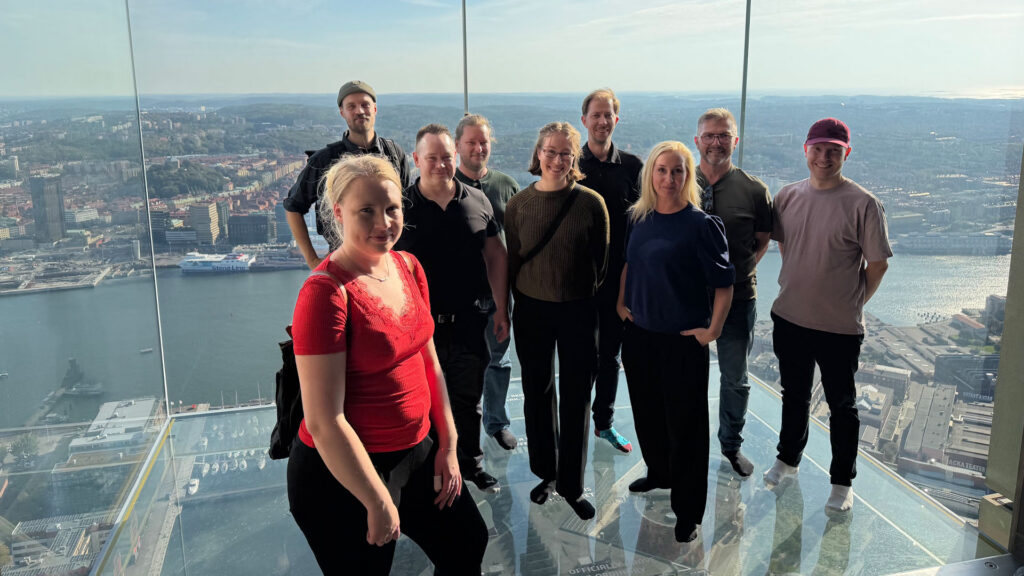
What if construction did more good for the environment?
The discussions are well structured by Cíaran Malik's illustration of different approaches to design, which illustrates the direction of thinking, not a formal classification.
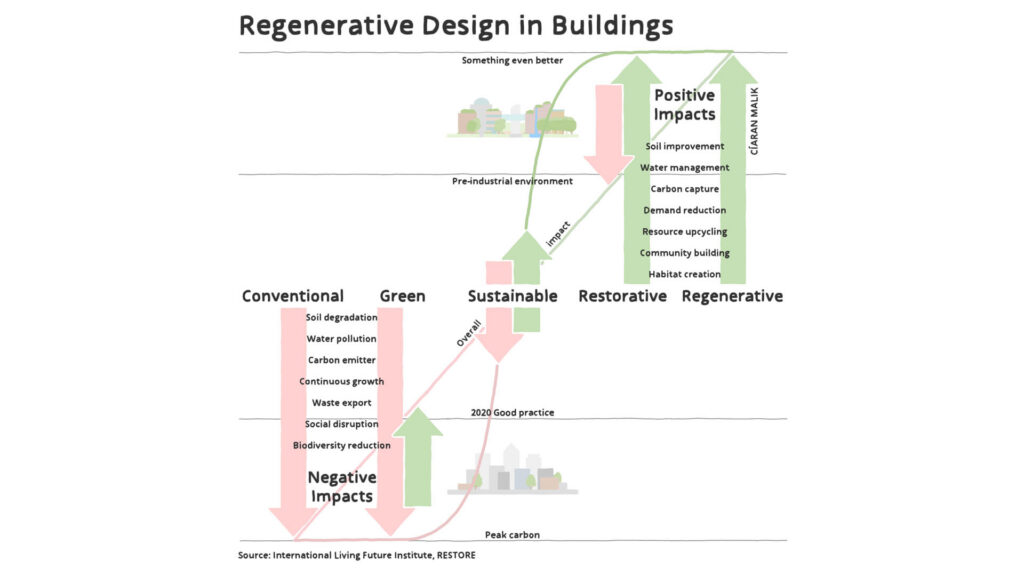
- Conventional construction, conventional, burdens the environment.
- Green i.e. green design reduces load.
- Sustainable In other words, sustainable planning aims to ensure that activities do not undermine the opportunities of future generations.
- restorative that is, restorative or restorative design repairs damage that has already occurred.
- Regenerative takes the goal even further: the built environment strengthens the ecological and social capacity of the place and creates the conditions for continued positive impacts. The review extends to, for example, soil, water, habitats and communities.
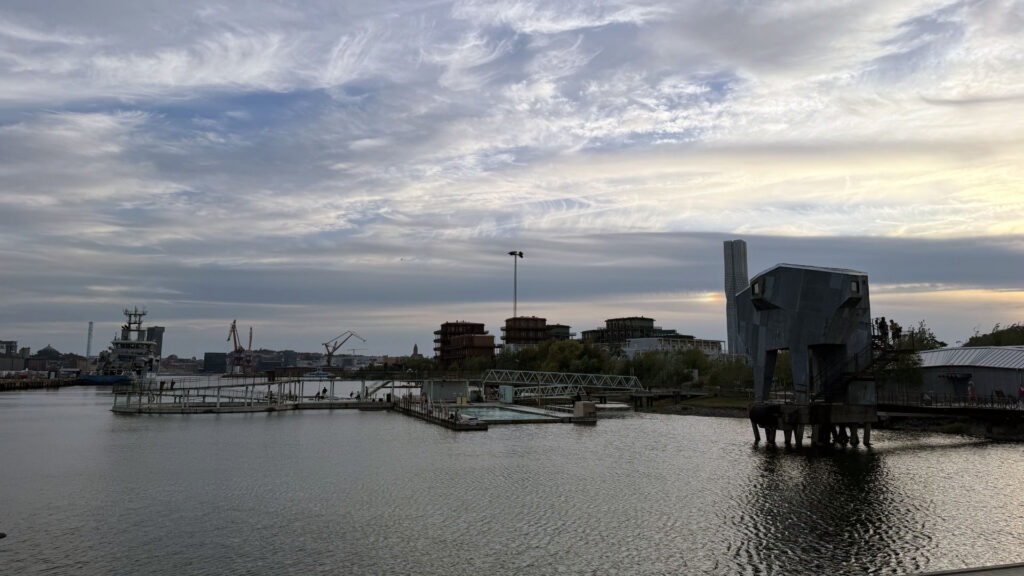
A broader perspective was concretized in the former port area of Frihamnen. In Jubileums Parken, a park, swimming, sauna and common spaces have been developed together with local residents and operators.
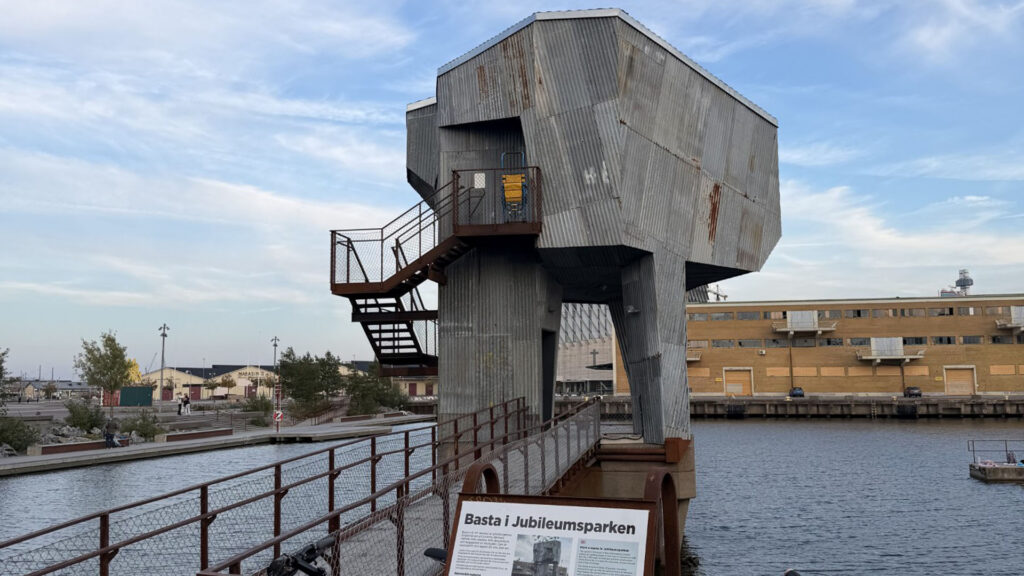
Water management, vegetation and biodiversity are all part of the same whole. At the same time, the city is being built for people to meet and learn.
Concrete elements from an old department store found new life in a residential building
Although I follow the development of the construction industry closely, I was really surprised how, in the Återbruket 66 rental apartments, the concrete floor elements from the old IKEA department store and the glued laminated timber beams from the Isdala ice rink had been given a new life as frame structures. As much as 90 percent of the load-bearing structures on the site were reused materials. In addition, the bathroom fixtures and facade materials of the apartments were recycled.
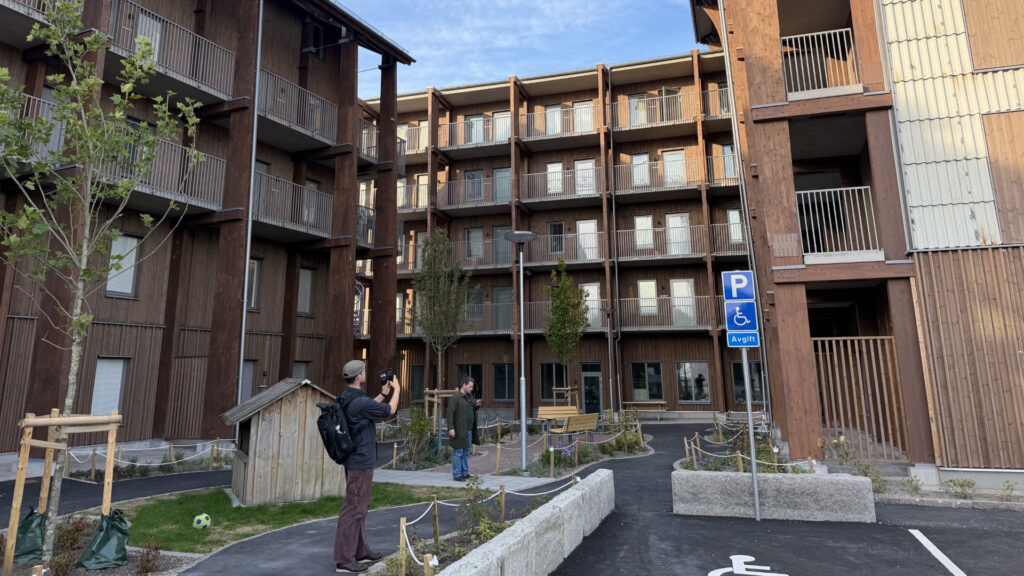
The project showed how much the operating methods have to change: the available building components and their properties have to be known already at the beginning of the design. The project had to redesign the frame structures because the materials designed in the first phase were not suitable for the new purpose. Quality assurance, documentation, storage and logistics are an integral part of the whole.
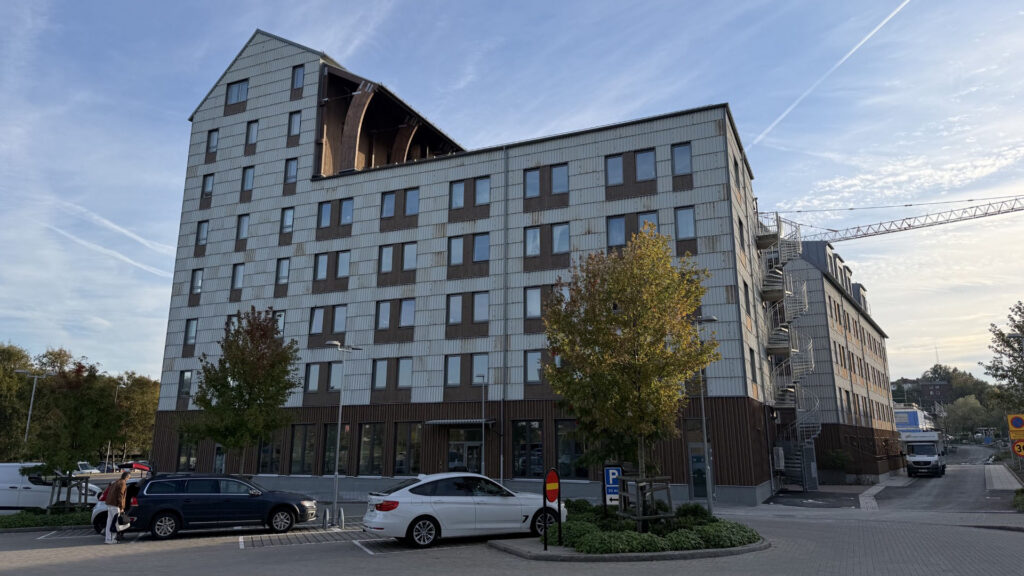
I see digitalization as playing an important role: reliable information about the properties, condition, and availability of building components enables systematic and efficient planning and procurement.
Alongside individual successes, we need functioning markets and processes. Other sites in the Backan area completed the picture: In Omställningen, the carbon budget guided the planning and procurement alongside the financial budget. In Hoppet 2 day care center, the old concrete base slab was retained as the foundation of the new building, which avoided demolition, earthworks, foundation and foundation work.
The future needs research and experimentation
In Finland regenerative construction The content and metrics still need to be specified: to what baseline is the change compared, what is being measured and over what time frame?
A circular economy solution or a low carbon footprint alone does not demonstrate the regenerative nature of a project. We need research into how the impacts of construction are interconnected and how the strengthening of the environment and communities can be verified.
I think it is important that Tampere University and Chalmers bring researchers and industry players to these questions. Future-oriented research helps identify opportunities that current practices do not yet reach.
I returned from Gothenburg with the idea that the possibilities of the circular economy in construction are already greater than we easily assume. Our task is to find out how to turn these experiences into a safe, high-quality and economically viable construction experience in Finland.
- More information about TUNI's regenerative construction research project
- More information about Chalmers' Future Regenerative production for Sustainable Housing and buildings research project
Antti Aaltonen
Director, Construction Development
antti.aaltonen@rt.fi +358 40 514 3626Confederation of Finnish Construction Industries (CFCI)
Write a comment