In the long term, the Finnish economy has one problem above all others – demographic development. Labor availability problems will challenge all industries over the next 15 years: up to 65 employees are now retiring each year. In the near future, we will be competing for talent not only among other industries but also among other countries.
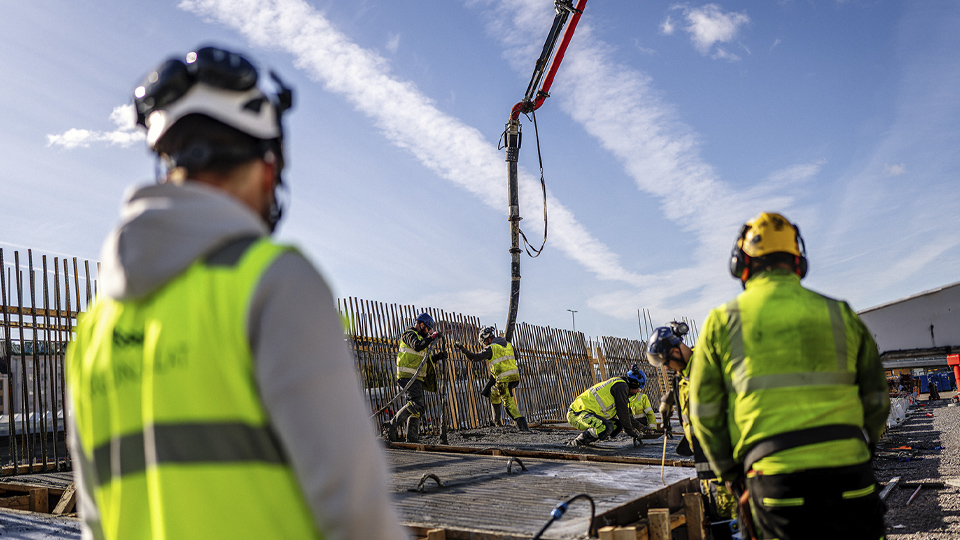
The construction sector has been in recession for over two years, and employment has been falling steadily as the weak economic cycle continues. Construction projects are long-term, so the employment effects of the recession are only visible with a delay.
The same applies to the recovery phase: when the situation in the industry develops in a positive direction, employment may even decline at first. However, companies need to prepare for the risk of labor shortages in the coming years, even if it still seems quite distant.
During the two-year recession in the construction industry, employment in the sector has been declining steadily. Because construction projects take a long time to complete, employment impacts are delayed and employment may decline for some time even when the recovery begins. Although the idea of a labor shortage may seem distant at this point, companies should start preparing for it now.
Due to the economic situation, many experts have left the sector, some permanently. In addition, younger age groups will enter working age in the next decade and will no longer be able to replace the retiring age groups. For example, according to the forecast of the Skills Anticipation Forum, 130–000 new jobs will open in the real estate and construction sector in 140–000.
Technical fields, such as construction, are heavily male-dominated, which makes the potential recruitment pool even narrower. Fortunately, this can be changed.
There is no silver bullet, but there are solutions to the decline in the workforce. For example, immigration leading to employment, attracting new workers and women to the sector, utilizing technology and increasing productivity, raising the employment rate and, on a smaller scale, extending working careers. However, obtaining labor from outside Finland is necessary in order to adapt to the strong retirement rate.
The construction industry needs international experts for clerical positions
The construction industry is a pioneer in terms of international workers. Of the total workforce on construction sites, Based on a survey conducted by the Construction Industry Council in spring 2024 one in five comes from abroad. The current economic downturn, with the workforce shrinking, has not changed the ratio, because foreign workers are often specialized in certain tasks. However, there is still much to be developed for white-collar workers.
RT has been actively involved in many projects that have explored and developed internationality. Here are a few examples:
- The construction industry, white-collar unions and universities have developed the industry Through the Future Dialogue*. The joint process modeled key measures for the employment of international degree students in Finland. Finnish language skills and contacts with working life are key factors in employment.
Technology solutions can solve language problems in many ways at work, but other means are also needed, for example in creating a sense of community. Finding solutions requires close cooperation with construction universities, international students and companies. RT and the white-collar unions, together with other stakeholders, also have a lot to do in this regard.
- The E2 Research Institute conducted two studies regarding internationalization in working life.
- PIKEUS project The research target was SMEs in Finland. The key findings were that for many companies, the availability of foreign labor is a necessity to continue and develop their business.
- The creators of the future of Finland In a survey conducted by the Finnish Institute for International Studies, nearly two-thirds of respondents had a positive view of the increase in the number of employees from different cultural backgrounds in the workplace. A quarter disagreed.
- In RT's skills needs assessment The growing role of foreign labor was emphasized. Companies have also developed their operations to be more receptive to foreign-speaking employees. However, there is still room for development, both regionally and especially in terms of white-collar recruitment.
Active work on the topic will continue in 2025, including by developing internships for international students and utilizing the lessons learned. For example, in the spring, our member companies Skanska and YIT will participate in EK's mentoring program, which aims to improve the employment opportunities of international university students in Finland. Watch the interview with Nina Jankola-Väntäri, Chair of the Labor Market Committee of the Finnish Parliament and HR Director at Skanska, and Minna Vidgrén, an expert at the Confederation of Finnish Trade Unions, on Huomenta Suomeksi.
*Future dialogue refers to a dialogue method between social partners to develop future working life. TTL coordinates the activities as part of the Work2030 package.
Discover the projects
- Future Dialogue: Kick-off webinar 15.5.2024
- Future Dialogue: Solutions for the Employment of International Students in the Construction Industry, webinar 22.11.2024
- PIKEUS project: SMEs and foreign labor in Finland – project description
- PIKEUS project: A recent report from the E2 study says: for Finnish SMEs, the availability of foreign labor is even a matter of fate
- Makers of the Future of Finland project description
- The makers of the future of Finland: Inclusion and cooperation in working life
- Makers of the Future of Finland, RT press release: The construction industry supports international experts to integrate into Finnish working life
Saku Lehtinen
Leading expert
saku.lehtinen@rt.fi +358 40 041 2057Confederation of Finnish Construction Industries (CFCI)
Hi Pirjo!
We have a few large international companies in the industry, where there would be an opportunity for job rotation through different projects, for example. This would allow us to expand and deepen our expertise in Finland as well. Also, so-called domestic internationalization is also a good goal to develop, for example, language skills and cultural knowledge, which also plays a key role in export operations.
Another problem in the regulated sector is the language proficiency requirements of clients and authorities, which the entire sector should solve together with companies, universities, authorities and clients. This is challenging and laborious, but everyone would benefit from it. It would be especially important to get new experts to stay in Finland, especially international degree students.
Hi Saku, great ideas, but how do you put them into practice?
Hi Saku, great ideas, but how do you put them into practice? In 1983, I was able to participate in the Construction and Engineering Export Training Group. We trained Finns to work in foreign projects in the Construction and Engineering Export Course. At that time, the so-called first export companies and people in the field were on the move. A lot has happened since then and now things have changed the other way around, or have they. Yes, we need expertise in the field the other way around as well.
I have pondered this question in various situations over the years while working in education.
In the past, Finnish construction companies were the first to go abroad and also formed their own cooperation alliances. Finland succeeded in those too…
Over the years, I have taken Finnish engineers around the world to learn specifically about the construction industry and its challenges. The basic education of a Finnish engineer is good – compared to, say, top universities in the USA. Finland is fine with education, but would RT accept the ball?