The industrialization of construction, standardization and productivity improvement play a key role in achieving national climate goals. For a long time we have also talked about the digital leap in the construction industry, where standardization is an essential part. However, our challenge is still that construction-related information is scattered and in different forms, and thus the supply chain process has not been able to be fully digitized. We have tackled this together with operators in the construction industry.
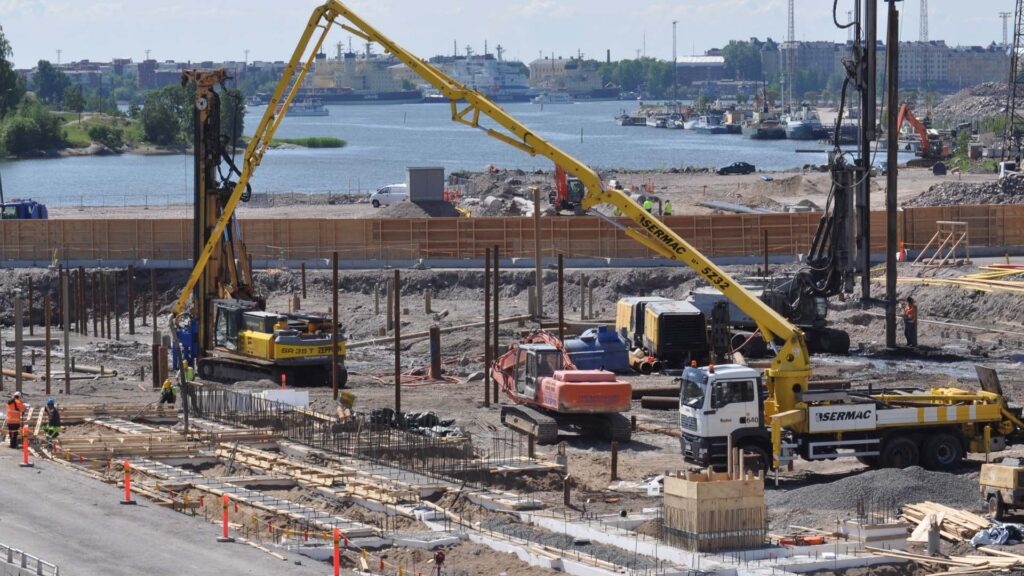
Finland is committed to achieving carbon neutrality goals in 2035. This goal also applies to the real estate and construction sector. In practice, the current building stock and construction emissions should decrease by 78 percent. The challenge is huge and it requires massive product development and innovation investments in materials, technologies, energy efficiency and production efficiency.
Making production more efficient, i.e. improving productivity, simply means that the same final product is produced with fewer resources: material, labor, energy and emissions.
Making production more efficient leads to industrial construction, where the aim is to standardize both design and implementation solutions. At this point, many may be afraid: will industrial construction and standardization lead to all buildings looking the same and our cityscape resembling the concrete suburbs of East Germany in the 70s?
Industrial construction or standardization do not automatically mean that we make similar buildings in a factory through serial production, but that we strive to take a model from the manufacturing industry and apply it to construction. Finnish precast concrete system BES is a good example of an industrial construction application that has brought a clear cost advantage, quality and efficiency to the industry for more than 50 years.
Standardization enables the digitalization of construction processes
Industrial construction requires a systemic change in the entire sector. We should plan what we do more systematically and precisely, both on the planning table and on the construction site. Standardization also opens up the possibility for us to digitize our processes. In order to harness the knowledge, the foundations must be put in place.
One cornerstone was the standardized processes, the second is the standardization of design information, and the third is the standardization of product and delivery information for all building products.
One characteristic of systemic change is that no problem or development target is identified. This is still the case at the moment: construction sites are built, the right material is found and the end customer receives the product he ordered. But this has required an absolutely insane amount of manual, person-level work throughout the value chain: design, procurement and production. Partly to blame is the fact that, in terms of money, more than 50 percent of construction project purchases are so-called project products for which there is no standardized delivery or product information.
Joint pilot projects of the industry
Construction industry RT has set out to solve this challenge together with its member companies. We are together Building 2030 led by Aalto University -consortium researched different supply chain models and how they correlate to the construction industry. Based on this, the first supply chains to be solved have been identified and separate supply chain working groups have been established.
Work on these first two working groups, concrete elements and standard building technology products, is underway and the first pilots should be started in the first half of 2024. The goal of the work is digitized product information of supply chains. With this work, we create the conditions for the industrialization of the Finnish construction industry.
The potential for improving efficiency is huge, and now is the right moment to start a change in the industry: Let's boldly set the goal of industrializing construction and improving productivity. When productivity improves, everyone wins: individual employees, companies, and Finland as a whole.
See also

Antti Aaltonen
Director, Construction Development
antti.aaltonen@rt.fi +358 40 514 3626Confederation of Finnish Construction Industries (CFCI)
Write a comment