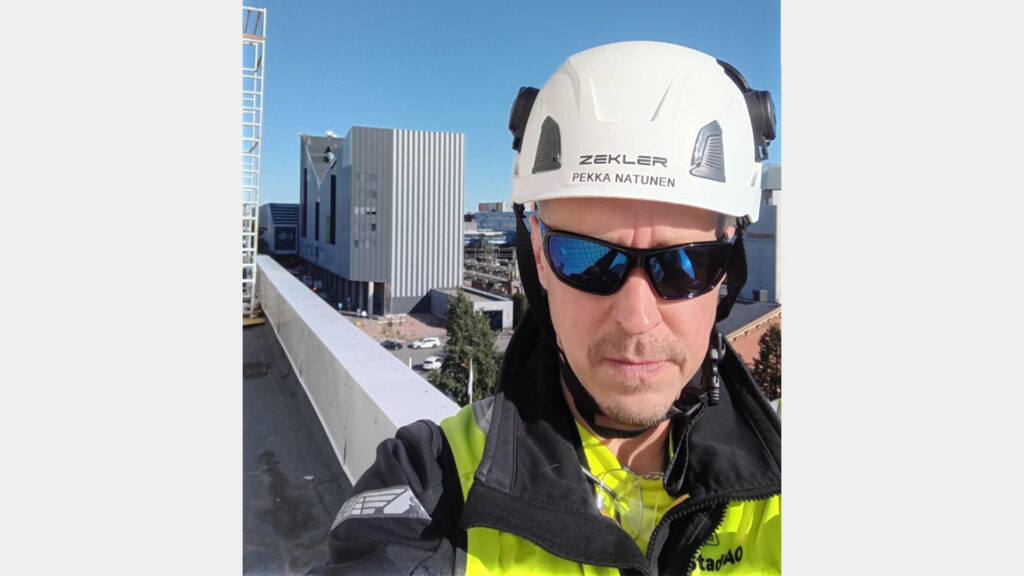
Comprehensive orientation, a designated person in charge and open discussion help young people become part of the work team and learn safe working practices. Veli-Pekka Natunen, a building construction teacher and a veteran of the construction industry at Stadin AO, shared good tips for companies in the safety week webinar on how to safely involve young people in everyday life on a construction site.
What should be taken into account in particular when it comes to the safety of underage students?
The teacher ensures that consent to the internship is obtained from the minors' guardians, and the teacher also takes care of the necessary notifications to the authorities. In unpaid internship periods for minors, i.e. training contracts, the teacher also ensures the necessary LVV notification (formerly AVI notification) required by the Licensing and Supervision Authority. During the apprenticeship period, the LVV notification is made together with the employer and teacher. In paid summer jobs, the employer is responsible for ensuring that the basic requirements are met before the internship begins.
What kind of skills do students have when they come for a construction site internship, especially in terms of occupational safety?
At school, you must complete an occupational safety card before starting your internship. The use of protective equipment, such as a helmet, goggles, and safety shoes, is part of the students' everyday life. They are also used all the time in the school's own workshop.
How has attention been paid to the safety of work machines and equipment during your studies?
The safe use of hand circular saws, cutting circular saws and ripping circular saws is taught at school before starting work experience, so young people are equipped to use these devices safely.
How do we ensure that the student's knowledge of using machines and equipment is sufficient?
Each young person is assigned a workplace supervisor. In addition, a discussion is held with the employer and teacher about the student's level of competence and what tasks can be given to him. There is no need to be too afraid of using a circular saw, for example, but minors are not allowed to use personal lifts or work in traffic control, for example.
How can construction sites and companies support student success in terms of safety?
A positive and friendly welcome on the job site is important from day one. Appropriate humor can help students integrate into the work community.
Regular safety patrols are a good way to inform the whole group that there are trainees on the site. A workplace supervisor is assigned to each student, but in practice the entire work group advises and guides. It is also a good idea to go over dangerous places and risk areas during safety walks, which will make the orientation practical. This will help you understand things better.
How do students adapt to the rules of the working world?
Students gradually learn the rules of the working life game, for example, respecting working hours. At the beginning, you may have to be reminded of the safety practices several times, but this is usually quickly adopted. Students usually learn the practices and rules of the field within a couple of weeks. Employers are expected to be a little patient, at least in the beginning.
What should construction site supervisors be aware of when a young person arrives at a construction site?
It is good to remember that students are not professionals and cannot be expected to have the same level of expertise as professionals.
Learners' skill levels and backgrounds vary greatly, and many students are nervous about their first days at work. For example, at Stadin Vocational College, we have about 220 construction students who come from a wide variety of backgrounds: there are many different cultures, languages, and more. Often, students can be shy on their first days at work and may also be nervous and avoid talking to their colleagues.
Young people have grown up with mobile phones and are used to communicating via them. That is why the use of smart devices, such as phones and headphones, must be addressed immediately. Using devices during working hours impairs concentration and exposes them to dangerous situations, so they should be limited to breaks.
It is important to emphasize that safety is always a priority and that work must be done safely. In school workshops, young people often have to be reminded about the use of protective equipment. The use of protective equipment and other things may need to be reminded a few times at first, but students usually learn quickly.
Watch the full interview on Turvavarti
Here you can find the Brother-Pekka Natunen interview from the Safety Watch webinar recording. The interviewer was a safety expert from the Finnish Building Construction Industry Association Henri Litmanen.