Tough results have been achieved at the top of safety competitions before, but never like this, which made the head judge happy.
"Now we are really excited to compete on safety," says the inspector happily. Kari Härkönen From the Occupational Safety and Health Department of the Licensing and Supervision Authority. He served as the chief judge of this year's national occupational safety competition for the building construction industry.
In the now-awarded and competitive construction site safety competition last year, the order of those who reached the podium was decided by hundredths of a second.
Härkönen says he was positively surprised that while the top spots in the competition have usually gone to residential construction sites, now large commercial and renovation construction sites that require many operators have taken the top spot with top results.
"It was really nice to check these, even large construction sites were quickly reviewed when there was almost nothing to point out. What was characteristic of the competition promotion was that I was asked about the results of other competitors right in the middle of the competition," says Härkönen.
According to Härkönen, a good safety climate will continue to be maintained when the right actors are given sufficient resources and support for safety work. The occupational safety and health representative plays an important role in this.
SRV's hospital building construction site is at the forefront
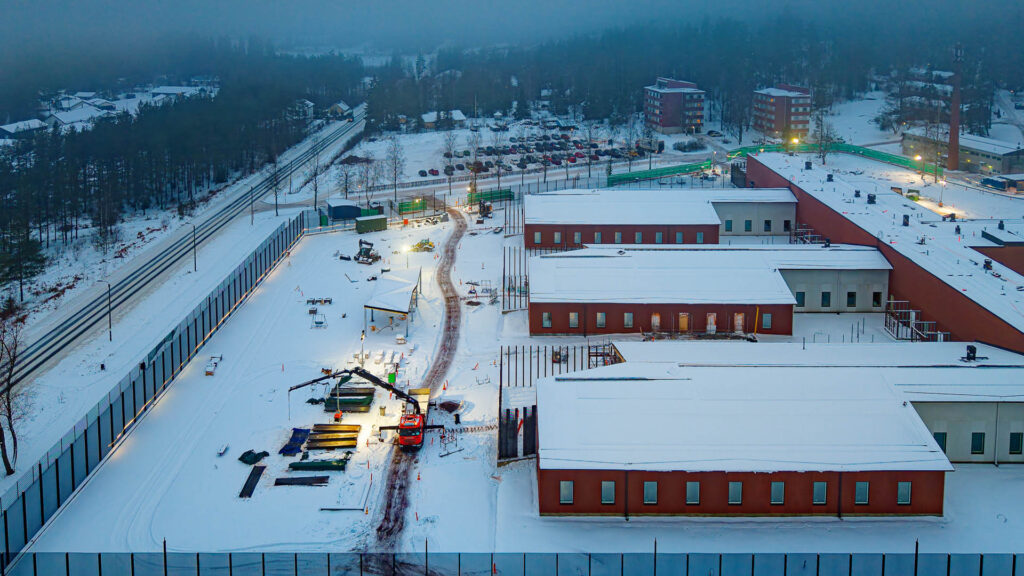
The Ohkola new building construction site won the 2025 national building construction occupational safety competition with a TR measurement index of 99,49. This is a forensic psychiatric hospital building for the Laakso Community Hospital Alliance. SRV is the main contractor for the alliance.
"Since safety is the primary focus of all thinking in the company, the alliance has also set high standards for safety in this project," building services manager Yuri Smirnov supplement.
The Ohkola construction site is a good example of the investment in the work of the occupational safety representative, as called for by the competition's chief judge. In Ohkola, the representative has been given a lot of freedom of action and the burden of daily safety work has also been shared. Among other things, there are separately appointed safety carpenters on the construction site.
"The delegate guides, guides and makes safety observations throughout the working day on the construction site. Observations are dealt with at a low threshold, and even if there is no acute danger, we want to prevent near-miss situations in good time", Ohkola construction site manager Juha North Stream says.
“It has always been a pleasure to come to the Ohkola construction site, which speaks to the good and caring safety atmosphere,” confirms the project manager. Mika Sairanen.
Health and safety representative Karo Ironman can only smile happily next to you.
"The most important thing for me is meeting people. The social aspect can then be emphasized and all possible things are talked about, both good and bad. And not everything has to be related to the performance of the work. What's up to you is always a good start," Rautamies explains his strategy.
He also provides orientation to everyone who comes to the construction site; on the day of the interview, about a thousand orientations had already been completed.
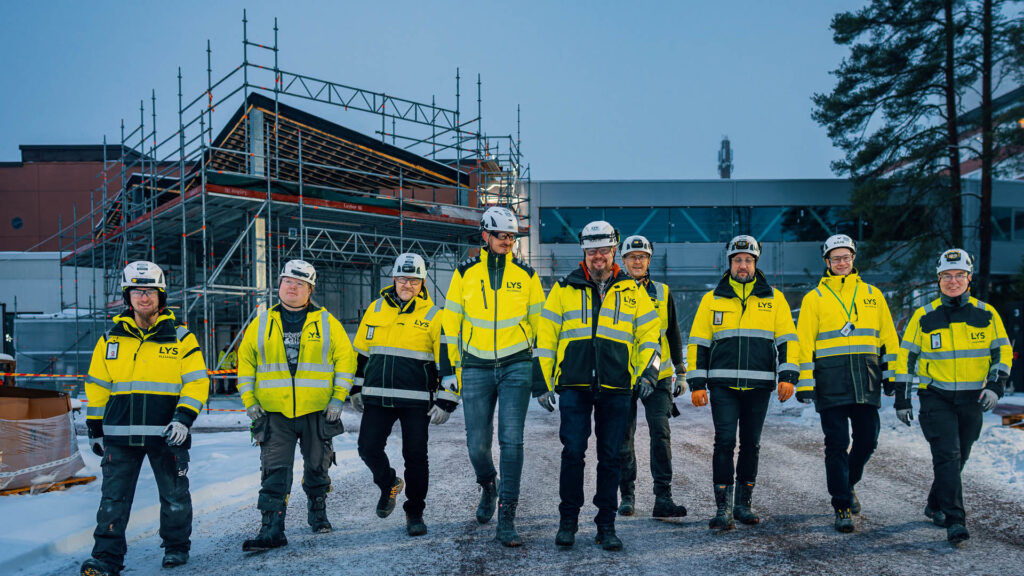
It is often said that behind good security there is always a good team.
"For us, this means in practice that the supervisors complement each other, the team has a lot of experience and kilometers behind them, including from hospital construction. Supervision has grown to include safety and individuals are given space to work for safety," Pohjoisvirta sums up.
But even on a safety model construction site, you have to remind people of things and make sure that the messages get through. In Ohkola, the occupational safety manager is largely responsible for that. Juha Aaltonen.
"The LYS project has safety instructions that go beyond the law, which we sometimes have to remind people about on the construction site. A separate permit must always be applied for to use chainsaws, we have set the fall protection at one and a half meters, and scissor lifts must also have fall protection connected," he lists.
"Juha's daily work in highlighting occupational safety issues is the foundation of our daily safety. Juha has the strength to constantly encourage the construction site. At the same time, Karo observes deficiencies and brings them directly to the attention of the contractors, so everyone is always well aware of the deficiencies that need to be corrected," the construction site foreman Kim Hedberg praises his colleagues.
Karo Rautamies is the top safety observer in SRV, with up to a couple of hundred observations per month. He is also involved in the weekly TR measurement round, so he maintains a good feel for the construction site.
Before each project, the contractor conducts a risk assessment of the work itself. It discusses the work phases, lists risks and ways to mitigate them. The assessment is updated as the site progresses. Safety briefings are held for the entire site or a smaller group if necessary.
At Ohkola's safe construction site, paths are marked with flagpoles and arrows, work areas are demarcated, and fire watch is precisely defined.
“The site has always received praise for its cleanliness, a safe site is always clean,” reminds Mika Sairanen. There are two full-time cleaners working at the Ohkola site.
What motivates the winning construction site to maintain a good level of safety day after day?
"Every working day when there are no deviations of any kind on the construction site encourages us to continue moving forward. When production goes as planned, it shows that a large team has succeeded in their work. Productivity and safety go hand in hand," summarizes Juha Aaltonen, an important point.
Silver for the renovation of NCC's historic building
The National Museum renovation site came in second place with a score of 99,45, four hundredths of a point behind the winner.
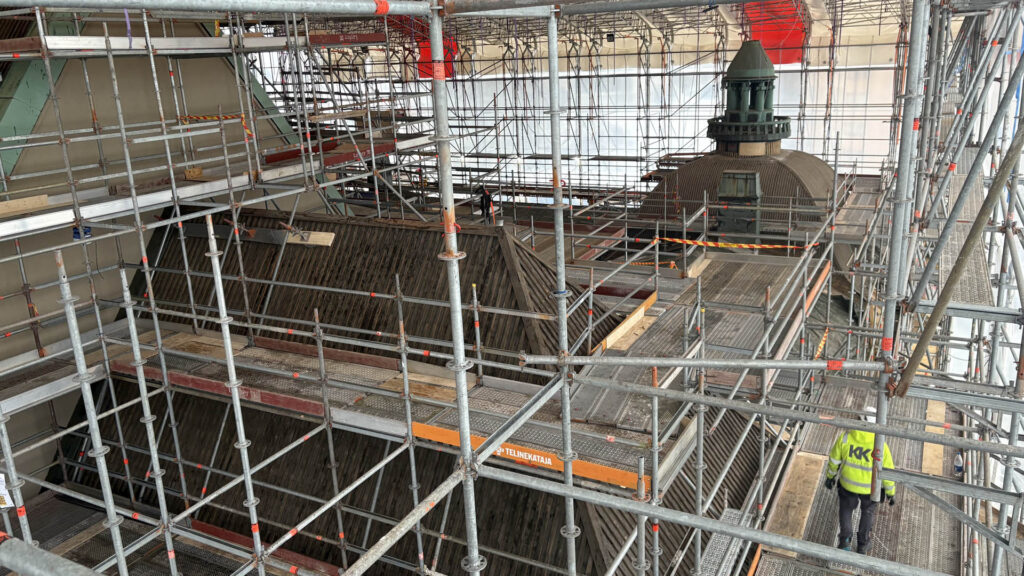
The average TR measurement for the entire 18-month construction period is 99,3. This is a tough number for a renovation construction site, where difficult demolition work has been carried out and whose steep roof slopes have required large, complex scaffolding solutions. According to the competition's chief judge, Kari Härkönen, the biggest safety challenges on construction sites currently lie in scaffolding, especially the tying down of platforms.
"It is absolutely essential for us that dangerous work phases are identified in advance, so that work can be planned safely," says the responsible foreman. Tuomas Nousiainen says.
Health and safety representative Tapio Paunila It is a good idea to have a good feel for what is happening on the construction site, and this is reinforced by the TR measurement round that is carried out every week. A different foreman usually goes on the round so that as many people as possible are kept informed about the safety situation on the construction site.
To ensure that your own measurement remains comparable, it is calibrated once a month by a technician who travels around NCC's construction sites with the TR meter. Pauli Haapiainen with the measurement results. At the same time, you get tips and learn new things from a surveyor outside your own construction site. This kind of comparison information is valued on the construction site.
The renovation of the National Museum also included the entire water roof. The roof is entirely made of slate and copper, and the building, which represents the national romantic Art Nouveau style, required complex scaffolding solutions.
“Despite the really demanding scaffolding solutions, as far as I can remember, we didn't receive any comments about the scaffolding in the competition,” Nousiainen can say with satisfaction. Instead, they came about more trivial matters, which left a bit of a mark on my mind.
If you already know you are good at safety, does participating in the competition still have much significance for the construction site?
"The competition underlines the importance of safe working. And we still have some catching up to do, next time we'll try to improve our ranking by one point," Nousiainen laughs.
"It's a really great feeling when you get a good spirit and the right kind of safety culture on the construction site. The largest possible team is involved in advance planning and risk identification. When the team gets excited, the work starts to support itself, and after that you don't have to intervene in everything anymore," he says, describing the positive safety cycle.
In addition to the normal safety rounds and weekly morning exercises, well-being and safety are also discussed once a month in the occupational safety and health committee. This is where the heads of different work groups meet to informally discuss shortcomings and seek immediate solutions.
"It has been great to see that the top managers have first adopted safe operating methods themselves and then, when they have new employees, they have taken it upon themselves to pass on this good safety culture," said the occupational safety manager. Erno Immonen toteaa.
In addition to good planning and identifying issues, you need good instructions, including detailed ones. For example, for charging the batteries of work machines, which takes place on the construction site inside enclosures made of stone slabs. And yes, sometimes you have to interrupt work and go through the reasons for the interruption.
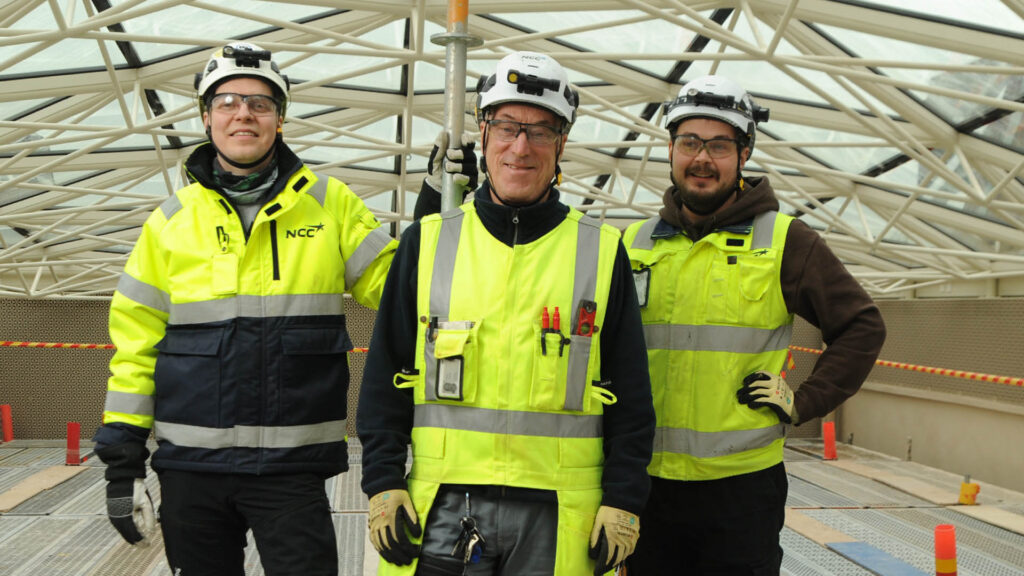
According to Tuomas Nousiainen, good safety management always starts with the company's management. NCC and the project developer, Senaati Properties, value safe work and are prepared to invest in it.
"The Senate coordinates safety with great ambition and is constantly involved in building a safe construction site for us." Senate Construction Manager Ari Kiiskinen "It has also played a big role in our doing so well in the competition," Tuomas Nousiainen says, thanking them for the good cooperation.
Third large commercial property extension
When five hundredths separate you from victory and one hundredth from second place, third place can be frustrating.
"It doesn't bother me at all. It's just great that we have a lot of safe construction sites," honestly answers the construction site manager of Jatke, which came in third in the safety competition. Pekka Ruokonen.
The Keilaniemi Porti office building, which is the subject of the competition, is a large and demanding construction site.
"Right at the beginning of the construction site, it was noticed that it would be located in a tight space next to Ring Road 1, a challenging traffic junction. When the building's eaves height rises to over 50 meters, the combination is quite challenging," says Ruokonen.
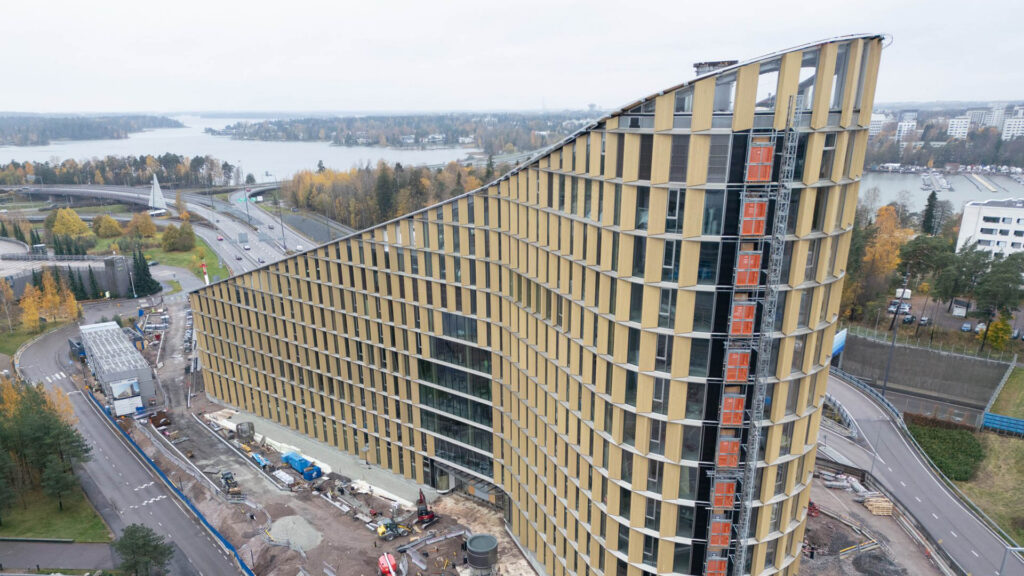
The fact that a demanding business premises construction project only leaves a hundredth of a profit increases the value of the investment even more.
"In commercial construction, the number of contractors is greater and overall management is more challenging than in residential construction. Safety principles must always be implemented all the way to the end of the production chain," he emphasizes.
When you want to invest in safety on a construction site, according to Ruokonen, it is worth first considering whether it will be possible with the practices and tools already in use – just by doing everything better and more carefully. Assessing work risks is a basic requirement on construction sites, but even that can be done well or poorly.
"We prepare risk assessments with great dedication, both quantitatively and qualitatively, and always together with the contractor's own management. This matter is already written into the contract. In other words, the implementation of the work is planned hand in hand. We go through them together in a weekly meeting and I always try to go through everything personally," he says.
To complement the remote orientation, the construction site uses a safe work procedure manual, which each employee receives in their native language. It has been supplemented with observations that have previously emerged on construction sites so that they can be prepared for them in advance.
"Not taking risks when working and making sure your protective equipment is in good condition are basic things. But when you get at least 90 percent of these things working, the whole thing works," he says.
At the Keilaniemi Porti construction site, the aim has also been to avoid restricting the occupational safety and health representative's activities too much, but to also allow time for meeting people.
“The idea is that even though we do technical things, they are always done by people,” says Ruokonen.
"Do we just want the construction site to look good, or do we really want the whole thing to work? Then we listen to even the employees' small concerns and suggestions for improvement. In order to go from 95 to 99 in the TR measurement, it is precisely these smallest shortcomings that need to be corrected," he continues.
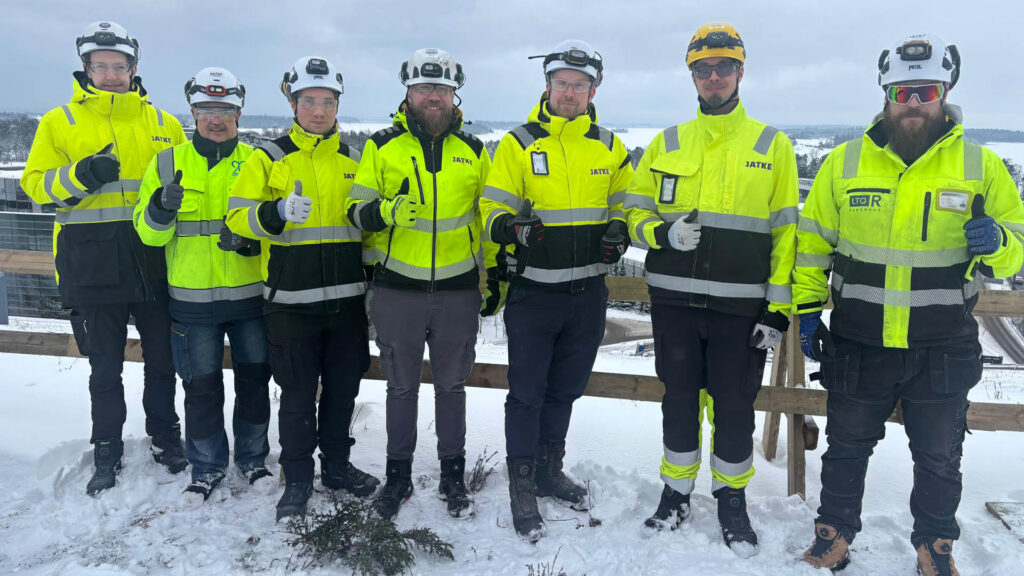
Regarding the good end result, Ruokonen wants to highlight the successful construction site logistics as well as the great cleaning team at the construction site.
"The competition measurement covered 15 floors and over 600 observations were made. There were no deviations in the TR report due to dustiness, which is an incredible achievement in such a complex facility. I have passed on my thanks to Loni Palveltu, who takes care of our cleaning," says Pekka Ruokonen. At the same time, he wants to remind you that good performance should always be given positive feedback.
"Once again, we saw a high level of competition. It shows that companies now have a strong desire to invest in occupational well-being and safety. In the long run, safety competitions are a great way to develop the industry together and cooperate with the authorities. Hopefully, the competition tradition will continue and develop in the coming years," says the expert responsible for safety issues at the Finnish Construction Industry Association RT. Henri Litmanen.
Text: Tommi Ahlberg
The 10 best construction sites in the national competition in 2025:
- SRV Construction Ltd, new building in Ohkola
- NCC Suomi Oy, National Museum renovation
- Jatke Toimilitat Oy, Keilaniemi Gate
- YIT Construction Ltd, Raisio Kertunlinna
- Hartela Southern Finland Ltd, As Ltd Water Tower Hill
- JM Finland Ltd, As Ltd Daylight Saving Time
- YIT Housing Oy, Tampere Summer Wind
- Hausia Oy, Finnoon Schooner
- Construction company Lapti Oy, Himos Project
- Skanska Building Construction Ltd, Wäinö Aaltonen Museum
National occupational safety competition
The national construction safety competition seeks and rewards a construction site that has managed occupational safety issues in an exemplary manner. The competition has been organized alternately between building and infrastructure construction since 2010. In the national safety competition in 2025, it was the turn of building construction.
The competition is organized by the Finnish Building Industry and Property Owners and Developers Rakli. The organizers' partners include INFRA, the Finnish Construction Federation, the Finnish Trade Union Pro, the Finnish Occupational Safety and Health Administration and the Finnish Occupational Safety and Health Centre.