At JPH-Maanrakennus, changes in the company's ownership base accelerated systematic development. The management's advice to others looking to grow is traditional but emphatic: dare to trust people and boldly move forward!
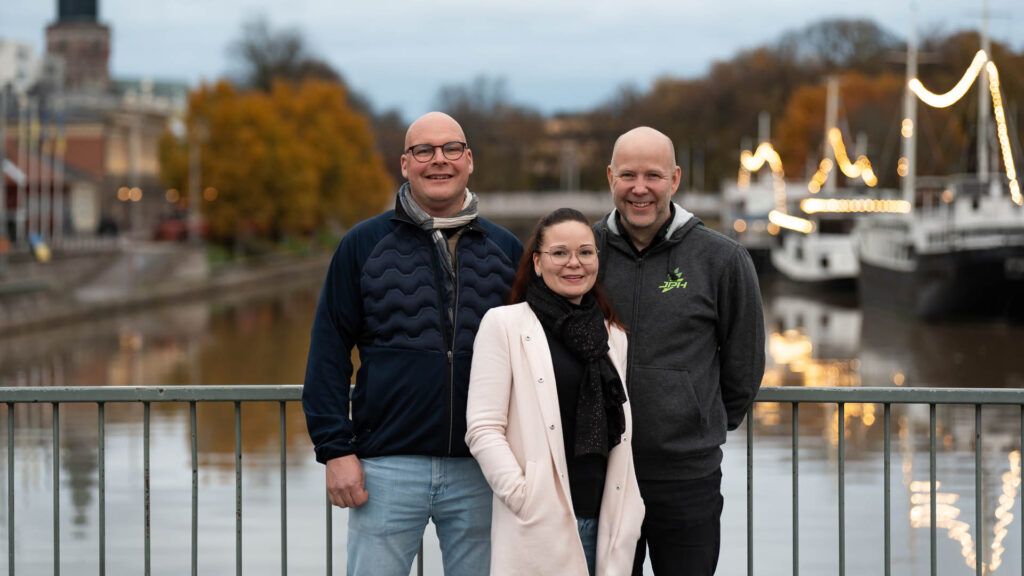
Founded in 2000, JPH-Maanrakennus has already undergone two changes of ownership. The first time progressed with momentum, quickly and in an avalanche-like manner.
"A father-son business is not necessarily always the easiest solution. There may be differences of opinion," entrepreneur, CEO Jarmo Hirvonen recalls the starting point of events.
From a business perspective, the right amount of tension can be a driving force.
“Generation differences and different management styles led to me buying out my father’s share of the company in 2016. This was an important milestone where different perspectives finally clarified decision-making.”
The changes brought lightness, ease and even a little courage to the management of the company. However, there was no risk-taking, as the next major change was prepared for a long time. The goal was to involve new owners outside the family in the operations to secure the continuity and growth of the company.
Discussions with the new owners took at least five years, and various practical preparations took 1,5 years. The company was assisted by an expert from the company's accounting partner, who had midwifed many corporate acquisitions and now brought his own channels and expertise into play.
Finally, in 2024, Jarmo's mother gave up her share in the company. Two employees of the company became the new owners, with shares of 10 and 5 percent.
No longer alone
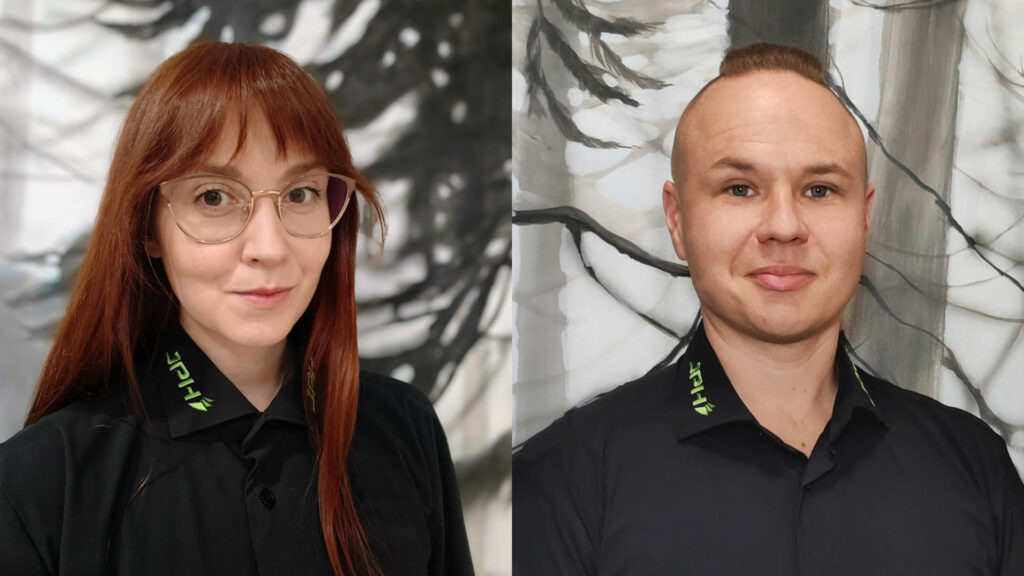
Ownership began to be positively reflected in the new partners' "everything they did," describes Jarmo. With employee owners, he got the new perspective and support he needed in decision-making - the feeling that he didn't have to decide everything alone.
The most important key to the change turned out to be the launch of the management team. The new owners joined the group. Even before this, Hirvonen had gained insight into the importance of the HR role in the HHJ course, hired an HR coordinator Noora Jormalainen and took him into the management team.
“Our reputation among job seekers has grown. Even though the company is already 25 years old, we were an unknown employer because we do not operate in the consumer market. Now we are getting signals of change,” Noora is happy about the recent development.
In autumn 2025, a development director was hired to lead the company. Ville TuominenWith Ville from Turku, the Eastern Finnish company will be able to strengthen its presence in Western Finland.
Now the management team's work has begun to develop rapidly.
"Everyone brings their own perspective to the group, whether it concerns finances, personnel or construction sites. We all look at things through different lenses," Noora describes.
Regular, monthly meetings constantly take things to a new level: "Working together becomes more intense. You just have to dare to give responsibility and develop the management team's work systematically," Jarmo reflects.
Processes for growth sustainability
Trust in our own experts has brought JPH to the threshold of growth, but the speeches lack any overt enthusiasm. There is a fair dose of Eastern Finnish realism in what we do.
“There are 27 of us, last week there were 24. In addition, we employ 5–15 professionals through subcontractors,” Noora explains the personnel figures.
"In the short term, investing in skills, especially at the white-collar level, will actually weaken the result. Changes will only start to be visible below the line in a couple of years," Jarmo estimates.
For example, management set a clear goal for Ville's recruitment: processes need to be improved so that it will be easy for new people to join the team in the future. This means clarifying and standardizing job descriptions and instructions on the construction site.
Ville came to the infrastructure industry from the software side. However, general and strategic management is pretty much the same in every industry.
"Uniform processes and operating methods enable us to scale our operations to a larger scale. Up until now, JPH has been very person-oriented, and everyone has been able to manage their plot as they see fit. Now that we want to grow, we need to get rid of this to some extent. A good way of operating for one person can still be adopted by the entire company," Ville says.
What gives a development manager faith in the possibilities for growth?
"Our awareness has started to rise. It's the first step. We've been a local, Joensuu company, and now we're seeing the first signs that we're being recognized elsewhere as well."
Through innovative processes, the work of management also begins to be visible to employees.
“The rules of the game have been created by involving and listening to the staff. At the staff day, we went through the strategy and rules of the game and found out whether everyone subscribes to the same values. Surprisingly, people were unanimous,” says Noora.
The frozen one is alive
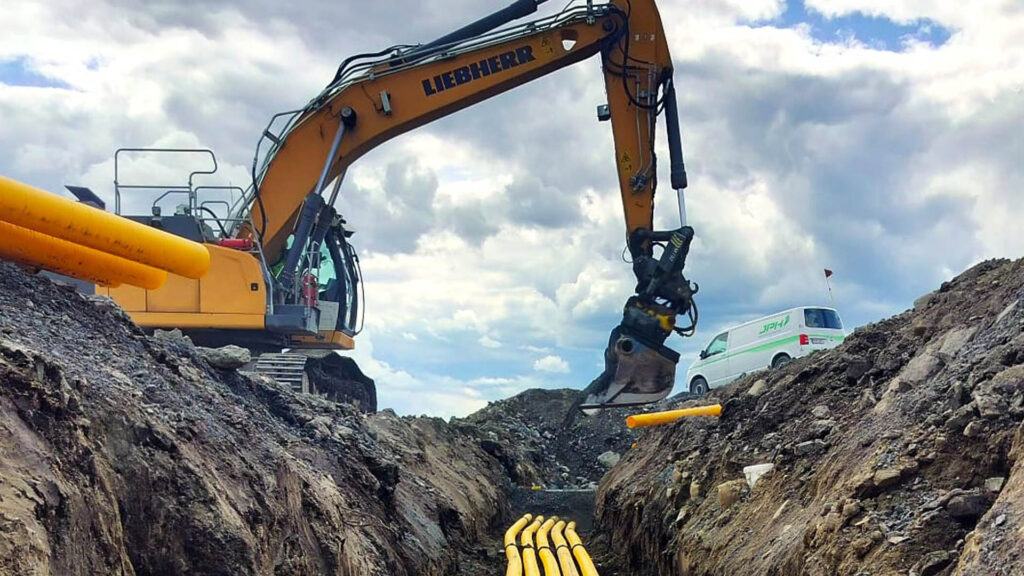
The outlook for construction has been in deep freeze for several years now. However, the field is large. It includes, among other things, infrastructure construction, which JPH-Maanrakennus also represents.
Even in bad times, the infrastructure sector has been supported by clean transition investments, rail projects, defense investments, data center construction, and mining – in addition to traditional road and municipal engineering construction.
Although there is work for infrastructure construction companies, the road to growth is rocky. There are many entrepreneurs and competition is fierce. The public sector is a significant customer for the industry, but for them, low price is typically the most important purchasing criterion.
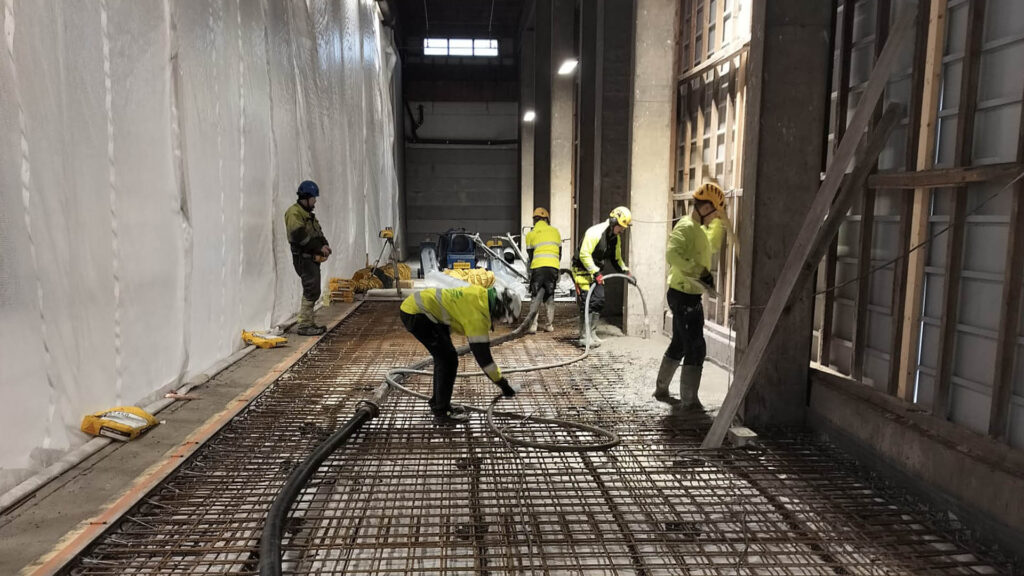
At JPH, we are approaching the situation from two perspectives. On the one hand, we believe that it is worth using the quieter time to purposefully develop our own operations, so that we can be on the front lines when growth starts. On the other hand, choices have been made: we have decided to succeed by focusing on industrial services, especially concrete and foundation construction.
The delimitation has freed up resources from public tenders, and it also facilitates communication and marketing.
The choices have far-reaching effects on the company's operations. For example, industrial customers are very demanding in safety matters, which makes daily work more difficult.
“Every employee is responsible for other employees. Safety management is our most important mechanism here. We also seek long-term partnerships with industry. In the public sector, projects are projects, and in the end, the construction site is packed and left. Our desire is for long-term customer relationships – we want to be an expert partner for the client,” Ville says.
Infrastructure construction is not what it used to be
Infrastructure construction, considered a home field, has been undergoing a transformation in recent years. More and more companies are working for foreign investors, and interest in exporting expertise has grown. In addition to Western Finland, JPH sees Northern Finland and South Karelia as important destinations. Sweden has also been on the radar.
"We are currently laying the foundations here so that we have the capabilities to operate regardless of location. International players have come to Finland, in whose eyes we must be a credible player. Ukraine is a big opportunity at some point. Over time, employees will also learn that internationalization is not something to be afraid of, but rather an opportunity – we all eat the same hay, and the same laws apply. Our own partnership model supports this thinking," Ville believes.
Ville's software perspective also helps us realize the possibilities of digitalization.
"For example, the use of AI in the industry is still small, but we are starting to explore its possibilities. There is a huge amount of hidden technology in machines and devices, and automated and autonomous work stages are making their way. For now, we are still mainly talking about the digitalization of communications; about maintaining the feeling of being a JPH employee, even if the teams are located in different parts of Finland."
In a growth company, the picture also includes identifying good operating models and harmonizing actions towards validated operating models and certifications. The company also needs to carve out a specific role and position in the community.
“We collaborate with educational institutions, for example, and have an impact on society as a member of INFRA ry and, through it, the Finnish Construction Industry Federation and the Confederation of Finnish Industries EK,” Ville reminds.
Finland on the rise by supporting ownership
When Jarmo Hirvonen looks back on the ownership changes in his company, dealing with the tax authorities emerges as one of the most challenging hurdles.
"The authorities could be faster. Everything went surprisingly well in the end, but processing times can be long. Looking at the field, many companies are now going to foreign venture capitalists. It should be easier for Finns – even our own employees – to become owners."
"If a company has a strong balance sheet, it takes quite a bit for an employee to be able to join. Could the government provide tax breaks?"
In the most recent ownership arrangement made to commit key personnel, it was surprising how much easier the arrangement would be to donate shares to an outsider than to transfer them to an employee. From the employee's perspective, the transfer, which was in the nature of a gift, was examined through earned income taxation. I remember the experience of injustice.
"Involving employees should be encouraged. For example, 50,000, 100,000 or 200,000 euros is a large sum for an employee to join a business," Jarmo points out.
Taxation can support the continuity and renewal of Finnish companies, so that control over jobs, for example, remains in local hands. Continuity is also an important human value.
"If I drop out, what happens to my company? The company's operations must be of such high quality and good quality that they can always continue. For example, a serious injury could happen and I could be out for a few months. There must be clear frameworks and responsibilities for who takes charge of what so that the company's operational capacity is maintained. This requires refined processes, but a broad ownership base is also an important support."
Jarmo's tips for change
- Be bold and open-minded. If you just settle for nothing and don't take action to change things, nothing will improve.
- When you start from a turnover of five million, you can't do it alone! Involve people, give them responsibility and trust in what you're doing.
- If more owners join, invest in a good shareholder agreement. For example, someone may want to leave later, or something unexpected may happen – then it is easy to see on paper what has been agreed.
JPH-Civil Engineering
- A family business from Joensuu founded in 2000 by Jarmo and Pertti Hirvonen
- Main industries: industrial construction, foundation construction, and foundation and concrete work
- The most important customer relationships are focused on the forestry, mining and chemical industries.
- Operating area: entire Finland, northern Sweden planned
- Turnover: approximately €5 million, number of employees 27; own excavators 4, own formwork equipment approximately 1000 m2